General Management

- Ehrendirigent Gewandhausorchester Leipzig / Staatskapelle Dresden / Bamberger Symphoniker
- Conductor Laureate San Francisco Symphony
- Honorary Conductor Danish National Symphony Orchestra / Swedish Radio Symphony Orchestra
- Honorary Conductor Laureate NHK Symphony Orchestra
- Honorary Conductor of the Norrköping Symphony Orchestra
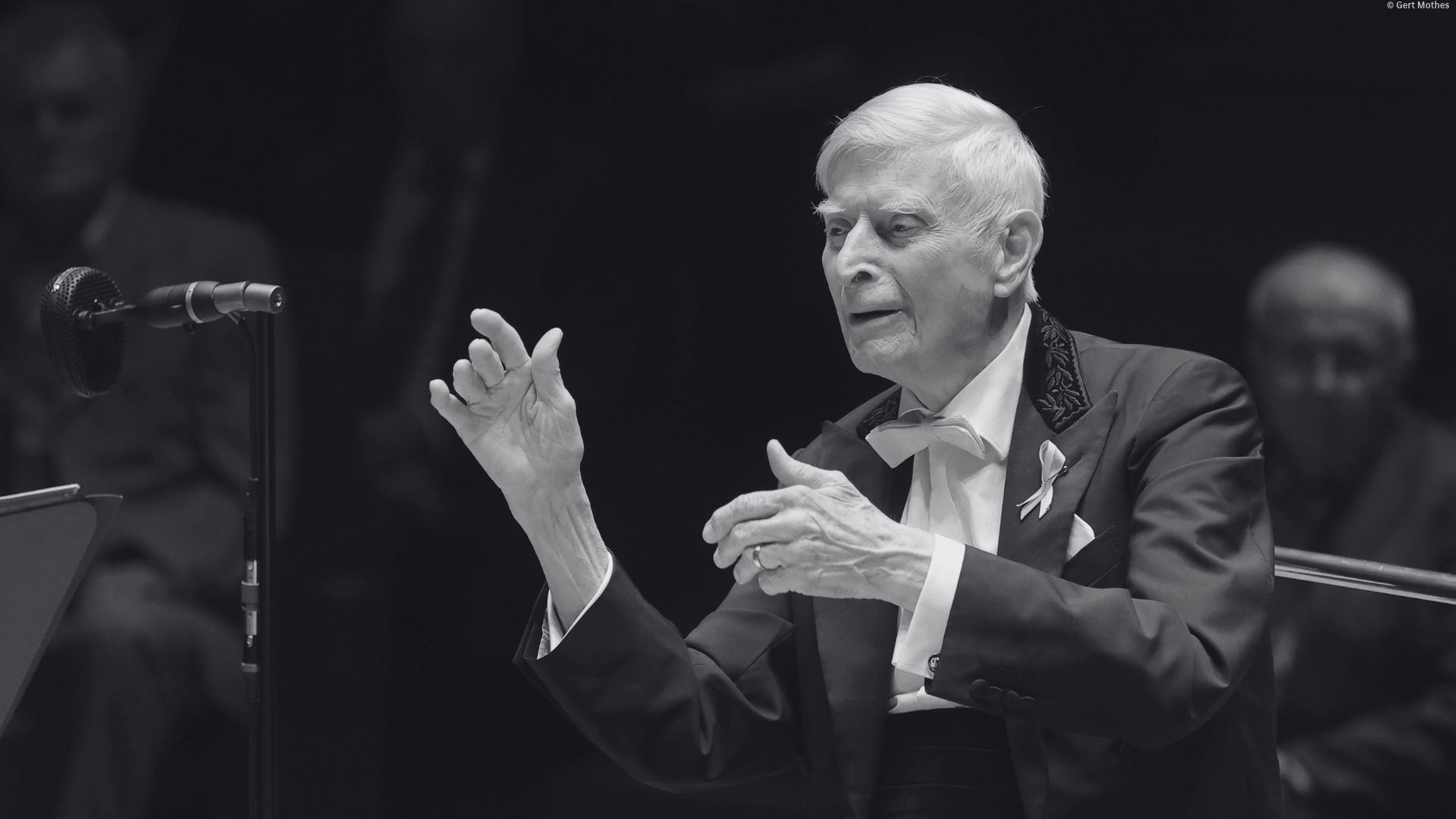
Hardly any conductor enjoyed a career as long, distinguished and consistently devoted to the art of music as Herbert Blomstedt. For more than seven decades, he stood before the world's leading orchestras, earning the admiration of musicians and audiences alike through an approach to music-making shaped by intellectual rigour, profound humanity and an unwavering commitment to the composer's intentions. His artistic authority never depended on outward gestures or forceful displays of personality. Rather, it has grown from an exceptional knowledge of the repertoire, an extraordinary command of the score and a conviction that the conductor's foremost responsibility is to serve the music.
Born in Springfield, Massachusetts, in 1927 to Swedish parents, Herbert Blomstedt spent his childhood in Sweden and Finland before the family settled permanently in Sweden. Music was an integral part of his upbringing, alongside the values of discipline, modesty and service shaped by his family's Seventh-day Adventist faith. These early influences would remain important throughout his life, informing not only his personal convictions but also his understanding of music as an expression of something greater than the individual performing it.
He studied violin and musicology in Stockholm and Uppsala, subsequently continuing his conducting studies in the United States and Europe. Among his teachers and formative influences were Igor Markevitch, and Leonard Bernstein, with whom he worked at Tanglewood. His early training brought together different musical traditions and intellectual perspectives, laying the foundations for an artistic outlook that would remain both open-minded and deeply rooted in the European symphonic tradition.
His professional conducting career began in 1954 with the Stockholm Philharmonic Orchestra. Following appointments with the Norrköping Symphony Orchestra and the Oslo Philharmonic, he became Chief Conductor of the Danish Radio Symphony Orchestra and subsequently the Swedish Radio Symphony Orchestra.
A decisive chapter followed in 1975, when Herbert Blomstedt became Chief Conductor of the Staatskapelle Dresden, forging a close artistic relationship with one of Europe's most distinguished musical institutions, despite the political divisions of the time and Dresden's position behind the Iron Curtain. During his ten years with the orchestra, he left a lasting imprint on the orchestra, with which he has maintained a close relationship ever since.
In 1985, Herbert Blomstedt took up the position of Music Director of the San Francisco Symphony, a tenure that would prove equally significant. Over the following decade, he helped transform the orchestra into one of the leading ensembles in the United States, strengthening its artistic identity and broadening its international profile by extensive touring. He also developed an exceptionally fruitful recording partnership with the orchestra, producing highly acclaimed series of recordings for Decca/London, including complete cycles of the symphonies of Carl Nielsen and Jean Sibelius. Many of these recordings received prestigious international awards, further cementing his reputation and establishing him firmly among the foremost conductors on both sides of the Atlantic.
After leaving San Francisco in 1995, Herbert Blomstedt returned to Europe to lead the NDR Symphony Orchestra in Hamburg before taking up the position of Gewandhauskapellmeister in Leipzig in 1998. In this historic office he became part of a tradition stretching back more than two centuries, joining a distinguished line of predecessors including Felix Mendelssohn Bartholdy and Arthur Nikisch. His association with the Gewandhausorchester proved particularly significant, combining the ensemble's distinguished heritage with his own deeply considered approach to making music. During his tenure, he revitalised the orchestra gently but effectively. He refined the sound and musical character, reintroduced the German seating and significantly expanded the repertoire. His left this post in 2005, but the relationship endured and was documented by recordings such as the complete cycles of the symphonies of Beethoven and Bruckner, which remain a benchmark to this day.
In fact, he stayed closed with many of the orchestras he had led. Dresden, Leipzig, San Francisco, Copenhagen and Stockholm, as well as the Bamberg Symphony and the NHK Symphony Orchestra in Tokyo, all honoured him with the title of honorary conductor or conductor laureate. In 2019, he was appointed an Honorary Member of the Vienna Philharmonic.
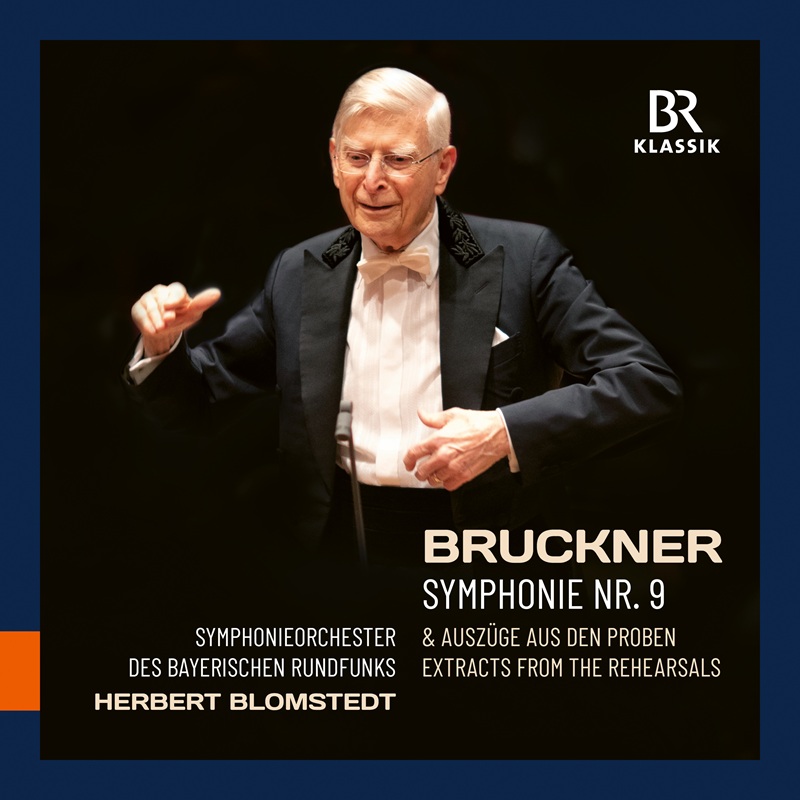
At the heart of Herbert Blomstedt's repertoire was the great Austro-German symphonic tradition, above all the music of Beethoven, Brahms and Bruckner which accompanied him throughout his career. His lifelong engagement with Bruckner in particular reveals a deep affinity for the composer's expansive musical architecture and profound spiritual dimension. Yet his musical interests extend well beyond these central pillars. His passionate advocacy of the music of Carl Nielsen, Jean Sibelius and Franz Berwald has been an enduring feature of his career, bringing these composers to audiences around the world. Nonetheless, the works of Johann Sebastian Bach were always of essential importance to him. Rather unusual at the time, his debut programme as a conductor, 1954 in Stockholm, opened with Bach’s Orchestral Suite No. 2. Bach was what he would always go back to. In his last interview, for the Praemium Imperiale he was awarded this year, he said that the one work he would want to do again and again was Bach’s Mass in b minor.
Equally distinctive was his relationship with the musicians before him. Herbert Blomstedt's rehearsals were renowned for their concentration, precision and purposeful economy. His authority derived not from imposing his personality but from the clarity of his musical ideas and the respect he showed for the orchestras with whom he worked. This combination of high artistic expectations and genuine collegiality earned him an exceptional degree of affection and respect.
His own personality reflects much of what defines his music-making: intellectual curiosity, modesty, kindness and an enduring openness to new experiences. His religious convictions have remained a quiet but fundamental part of his life, shaping an ethos in which music is associated with humanity, reflection and a sense of service. Far removed from the traditional image of the commanding maestro, Blomstedt has demonstrated that the greatest authority can be exercised without any need for outward displays of power.
Alongside his remarkable professional life, family always played an important role for Herbert Blomstedt. He married Waltraud (Traute) Petersen in 1955, having first met her in Göteborg a decade earlier. Their marriage lasted until her death in 2003. He spoke with particular affection of his wife, once describing their marriage as the most important event in his personal life. The family remained a close-knit part of his life, and his four daughters and seven grandchildren provided an important connection beyond the world of music and his demanding international career.
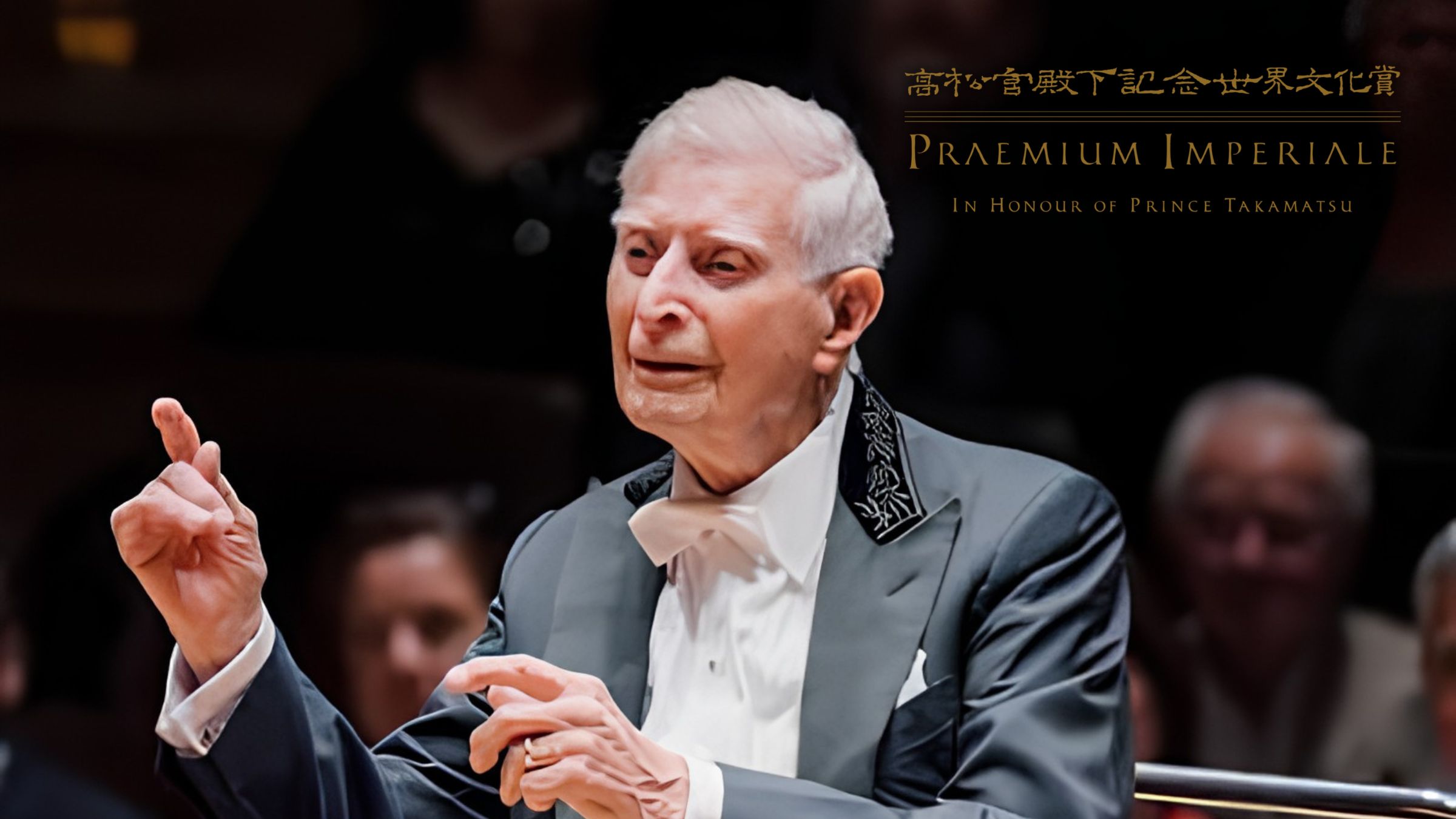
The many honours bestowed upon him include the Léonie Sonning Music Prize, the German Order of Merit with Star and numerous honorary doctorates. In 2026, his extraordinary contribution to music was recognised with the Japanese Praemium Imperiale, one of the most prestigious international distinctions in the arts.
His legacy lies not only in the recordings and performances that have enriched the musical world, but also in the example he set for generations of musicians. Deeply rooted in his Seventh-day Adventist faith, spirituality and respect for human relationships, his approach to music-making was an expression of personal integrity and a profound sense of purpose – never theatrical display, but a serious, life-affirming service. He showed that a lifetime devoted to music is, above all, a lifetime devoted to listening, learning and serving.
Herbert Blomstedt passed away peacefully on 4 November 2026 at his home in Gothenburg, surrounded by his family.
Address for condolences:
KünstlerSekretariat am Gasteig
Eva Oswalt
Montgelasstr. 2
81679 München
Germany